From BPO to AI
How Atender went from a tech-first BPO in 2019 to an AI-native customer-service platform in 2026 — in four chapters.
Atender started in 2019 as a BPO with one thesis: technology was going to reshape this industry, and we'd be the ones building it — not waiting for it.
We didn't know AI would be the answer. We just knew the tools had to get better. So we started building.
Atender Core
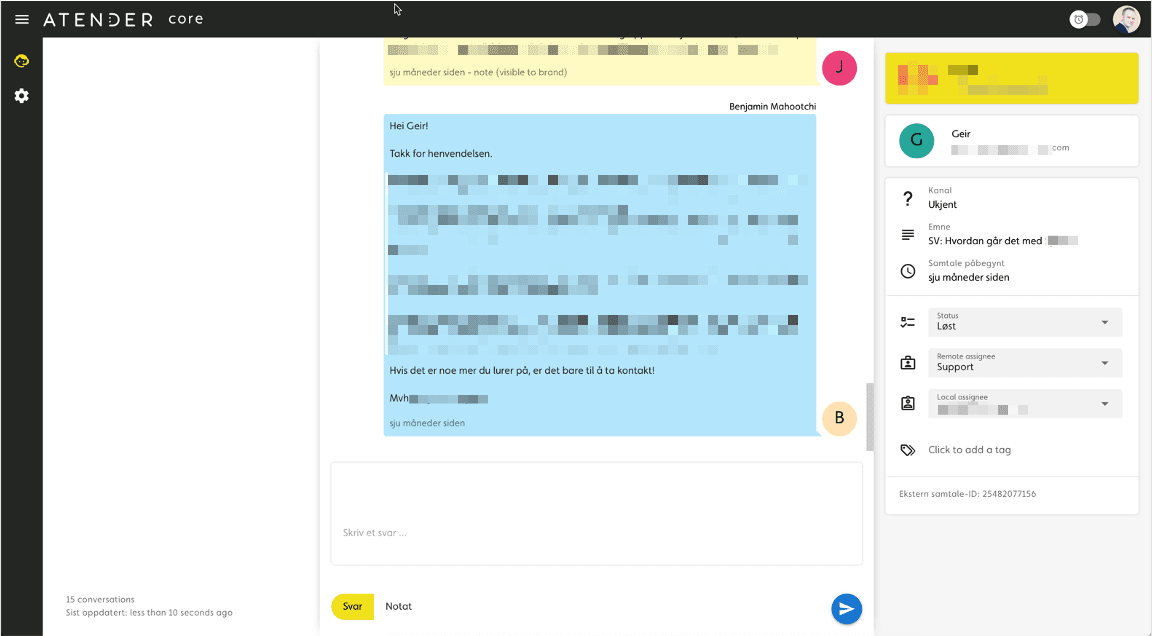
Our first software project. The idea was simple: give the brands we worked with a feeling of being in the room with us. They could listen in on live calls, watch communication happen in real time, and see performance metrics as they unfolded.
It wasn't a customer-service app yet — it was a window into one. And it taught us everything we needed to know about how support actually works.
Building our own stack
By 2020 we'd tried everything. Zendesk, Intercom, the lot. Each one promised flexibility and delivered the opposite. Integrations broke under the way we worked. Customers got tied to one vendor's roadmap. Agents lost minutes per ticket switching between tools that didn't talk to each other.
So we stopped. We decided to build the full stack ourselves, with one rule: we'd still integrate with anything our customers wanted — but they would never be tied to ours.
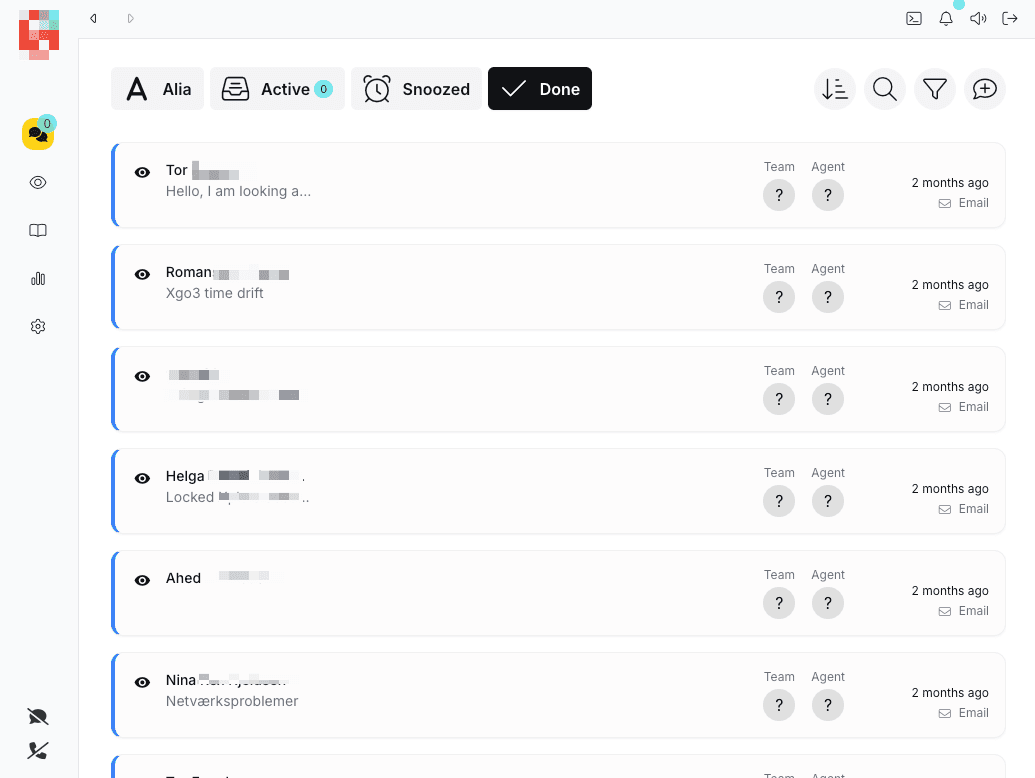
The first version of the Atender app launched in early 2021. Simple, fast, and with one obsession: usability. We were tired of customer-service apps with fifty things to focus on at once. So we threw it all out and carefully decided what was worth putting back.
“We threw everything out — then carefully decided what was worth putting back.”
Seeing AI coming
By 2022 the timeline had moved. AI was coming faster than anyone in the industry was admitting. v1 was working — but it wasn't built for what was about to arrive.
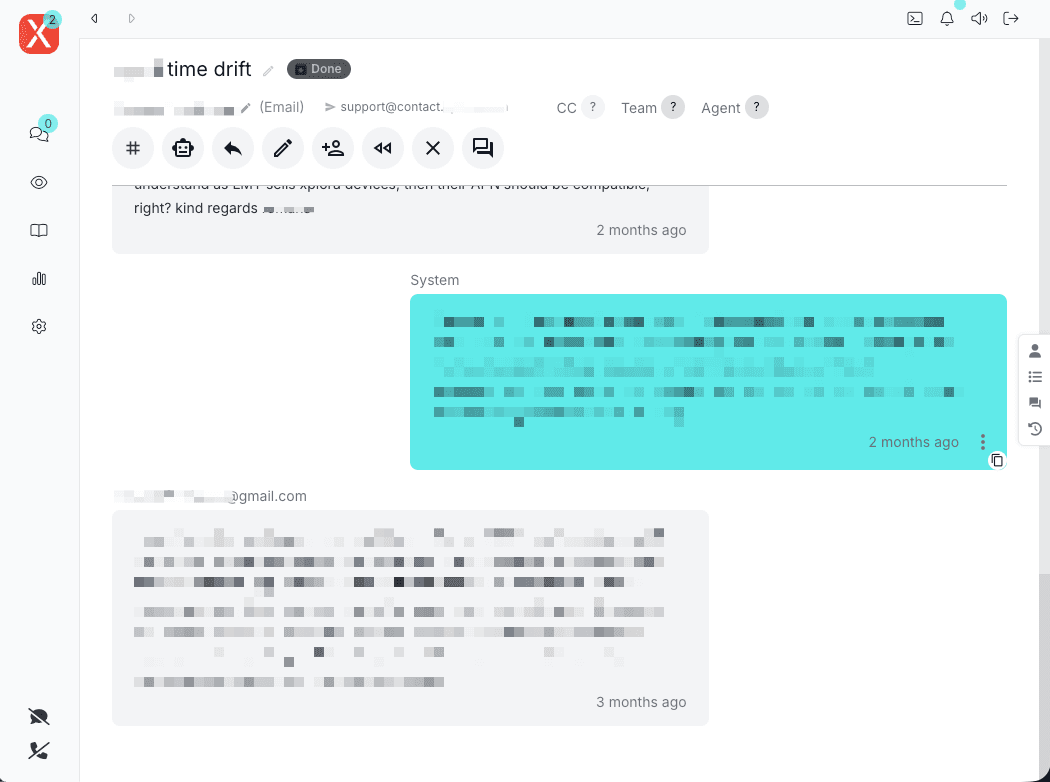
So we kept v1 running and started v2 from scratch. A new foundation, built for scale and for the kinds of inputs and connections AI would demand.
Mid-2023, v2 went live. To users it looked like a design refresh and smoother onboarding. Underneath it was a different machine — and the first version of Atender to ship AI tools inside the app itself.
Building for AI
Late 2024, the same realisation hit again — only louder. AI wasn't just changing what tools could do. It was changing what platforms needed to be.
We started v3 with a different premise: the platform itself had to be flexible. API-first, built for the way AI agents now plug into tools, engineered so a new integration takes a day instead of a quarter. If a customer needs Amazon connected today, we ship it tomorrow — same day, when it matters.
In early 2026, v3 went live with our first customer. It's the platform we lean on now, and the one we'll keep building on.
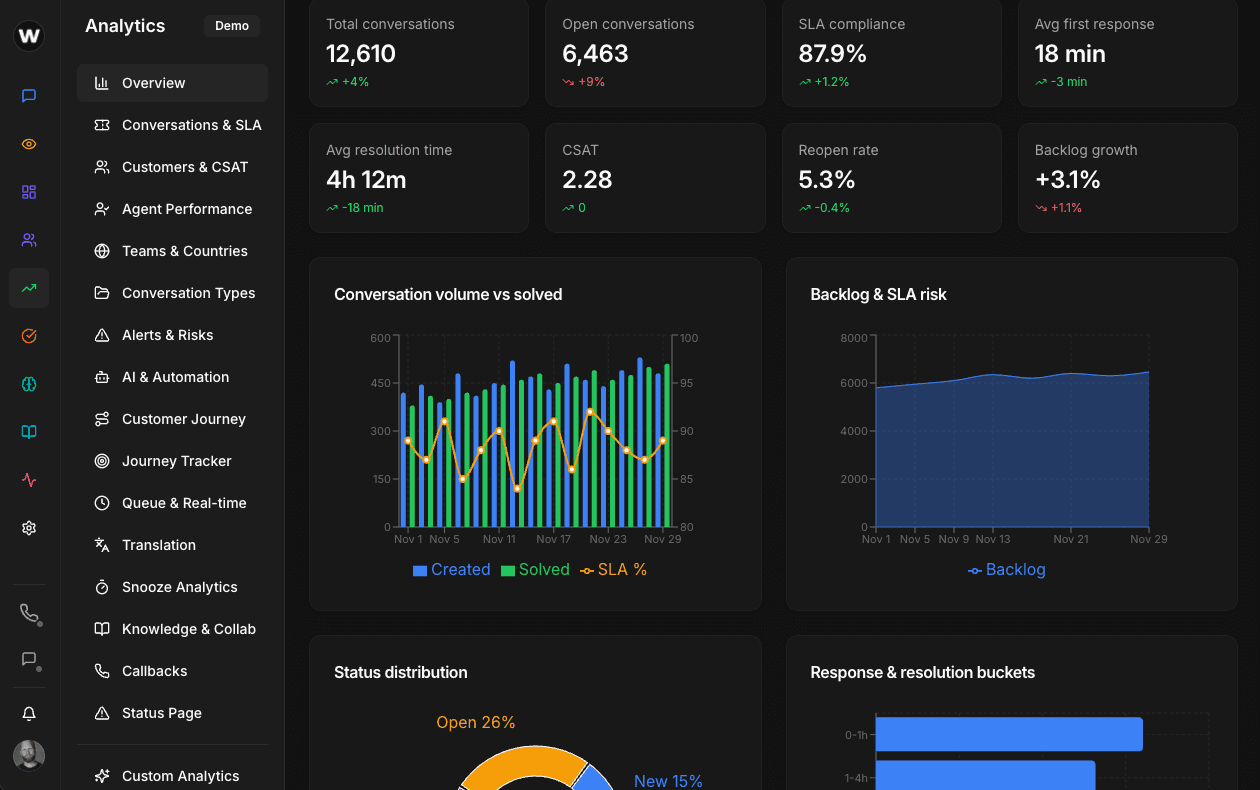
The platform was built for what we couldn't quite predict — and that's the point.
Whatever comes next — in voice, in text, in agents — we have ground to build on.